
Our First Album Is Here: Alphabet Songs from Around the World, Pt. 1
Published: September 23, 2026 Category: Announcements Read Time: 6 min read
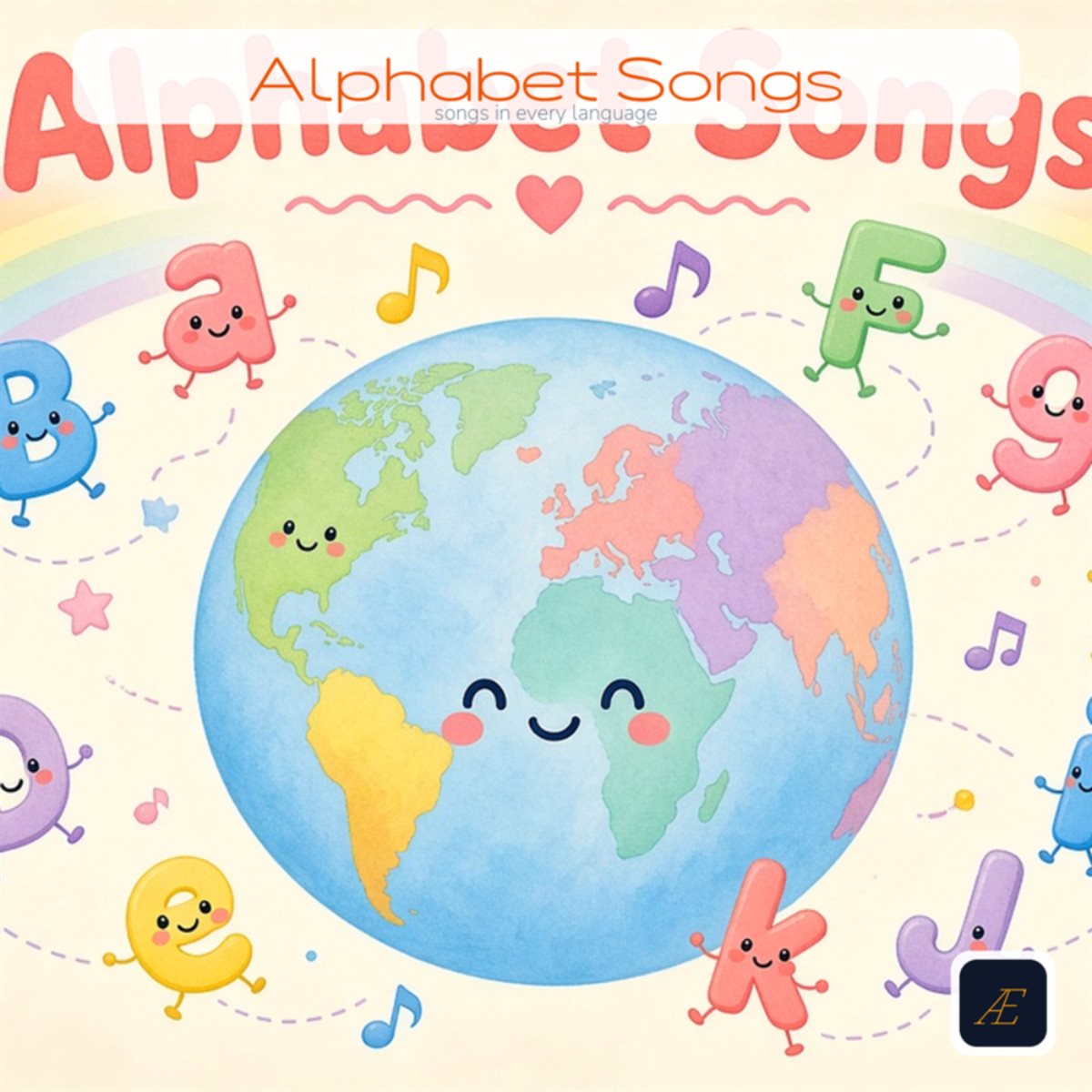
[!NOTE] Key takeaway: LingoCapture is releasing its first music album, LingoCapture (Alphabet Songs from Around the World) Pt. 1, on all major streaming platforms this week. It features multiple ABC songs across French, Spanish, and Portuguese. Below: what is on the album, why we started with the alphabet, how the three alphabets differ (so you know what to listen for), and easy ways to use the songs at home.
The Announcement
This week, we are releasing our first album. It is called LingoCapture (Alphabet Songs from Around the World) Pt. 1, and it will be available on all major streaming platforms. Search for the album title in your favorite music app and press play.
Pt. 1 features multiple ABC songs across three languages:
- French
- Spanish
- Portuguese
As the "Pt. 1" suggests, this is the first volume of a series, not the last word. All three languages share a Latin alphabet with English, so a child (or an adult) will recognize most of the letters on day one and can spend their effort on the sounds and the names, which is where the songs come in.
Why Start With the Alphabet?
Every language you learn with a Latin script starts in the same place: the letters. And many people learned the English alphabet by singing it. That is not an accident, and the history is a nice surprise for anyone learning French.
The tune that most English speakers use for the ABC song is French. The melody was first published in 1761 in a French music collection, without words, and it later became the French nursery song Ah! vous dirai-je, maman. Mozart wrote a famous set of piano variations on it. The ABC lyrics were added later, and the song was first copyrighted in 1835 in Boston. The same melody has also been used for the Spanish, French, German, and Arabic alphabets. So when a child in Montreal or Madrid sings the letters, they may be singing the same tune that a child in Toronto sings in English. The alphabet song turns out to be one of the most widely shared tunes in the language-learning world.
Does Singing Actually Help?
There is good research behind the idea that a tune helps words stick, with an important caveat about its scope. In a 2014 experiment published in Memory & Cognition, Ludke, Ferreira, and Overy taught 60 adults short Hungarian phrases in one of three ways: speaking them, speaking them rhythmically, or singing them. After only 15 minutes, the singing group performed best overall, and their advantage was statistically significant on the two tests that required them to recall and produce the phrases. The advantage was not explained by age, mood, working memory, or musical training.
Two honest caveats. The study tested short-term learning of phrases by adults, not alphabet learning by children. And it does not say singing is magic; it says a melody gives words a shape that is easier to hold on to. The alphabet is a good fit for that idea because it is a fixed sequence of short items, which is exactly what a tune is good at carrying.
Three Alphabets, Three Things to Listen For
The three languages use the same 26-ish letters, but they name them differently, and that is where the songs get interesting. Here is what to listen for.
| Alphabet | French | Spanish | Portuguese |
|---|---|---|---|
| Letters | 26 | 27 (adds ñ) | 26 |
| Accents | Accented letters (é, ç, and so on) are not separate letters | ñ is its own letter; accents are not | Accented letters (ã, ç, and so on) are not separate letters |
| Names to listen for | H is ache, W is double vé, Y is i grec, Z is zède | V is uve (or ve), W is uve doble (or doble ve), Y is ye (many people still say i griega), Ñ is eñe | K is cá, W is dáblio, Y is ípsilon |
French: The alphabet has 26 letters, and accents such as é and ç are marks on those letters, not extra ones. W and K are used mostly in loanwords and regional words, and the letter names (ache, zède) are worth hearing a few times, because they do not look like how they sound.
Spanish: The Royal Spanish Academy decided in 2010 that ch and ll are no longer separate letters, so the alphabet officially has 27 letters, and the only one English does not have is ñ. Because b and v sound the same in Spanish, the names be and uve are there to keep them apart when spelling a word out loud.
Portuguese: The alphabet grew from 23 to 26 letters when k, w, and y were formally added by the 1990 Orthographic Agreement, which took effect in Brazil in 2009 and in Portugal on a longer timeline. The letter names also vary a little by region, so European and Brazilian singers may say a couple of them differently.
How to Use the Album
You do not need a lesson plan. A few easy ideas:
- Make it background music. Play a song a few times while you cook, drive, or tidy. Repetition through a melody is the whole point.
- Point and sing. Print or draw the alphabet and point to each letter as it goes by. Matching the sound to the shape is the step that turns a tune into a skill.
- One language a week. Pick French, Spanish, or Portuguese and live with it for seven days before switching. Notice which letter names surprise you.
- Spell your name. Once the letter names are familiar, spell your name (or your dog's) out loud in the new language. It is a classic way to practice, and it is used every day in real life, on the phone and at the airport.
- Follow it with words. After the letters, learn ten real words. Our posts on ten fall words in French, Spanish, and Portuguese and ten back-to-school items with kid-friendly sentences are good next steps, because every word in them is something you can point at.
Where LingoCapture Fits
The alphabet gives you the building blocks; the app gives you something to build with them. Once the letters are familiar, AR Scan connects the words to the objects around you, so cuaderno is attached to the real notebook on your desk, not to a list. The Smart Feed brings those words back in a short arc, and the AI Chat Personas are where you use them out loud. Songs get the sounds into your ears, and the app gets the words into your day.
References
- Ludke, K. M., Ferreira, F., & Overy, K. (2014). Singing can facilitate foreign language learning. Memory & Cognition, 42(1), 41–52. https://doi.org/10.3758/s13421-013-0342-5
- The ABC Song. History of the song and its melody. Wikipedia
- Ah! vous dirai-je, maman. The French tune behind the alphabet song. Wikipedia
- French orthography. The 26-letter alphabet and letter names. Wikipedia
- Spanish orthography. The 27-letter alphabet and the 2010 RAE changes. Wikipedia
- Portuguese-Language Orthographic Agreement of 1990. The addition of K, W, and Y. Wikipedia
Listen to the album on your favorite streaming platform this week, then turn the letters into words. Download LingoCapture free on the App Store or Google Play.
Interested in contextual capture and spaced review? Download LingoCapture free on iOS and Android.